
How Long an Eviction Stays on Your Record
How long do DFW landlords look back at evictions? Typical lookback windows, public-records vs tenant-bureau timing, and how dismissals change things.
Property managers have access to more background data than ever before. Our apartment locating experts at Dallas Second Chance Apartments see perfectly qualified renters lose great units because they misunderstand this system. A strong credit score might secure cash rebates or free moving services, but an old public record can stop the process cold.
Renters often ask how long does an eviction stay on your record Texas law allows.
The answer depends entirely on which system is reading the file. We track the exact retention windows used by property managers across Dallas and Fort Worth to evaluate every application. Knowing the timing helps you gauge approval odds accurately before spending a nonrefundable fee. Our goal is to explain the three main reasons this data lingers and outline practical ways to respond.
The three sources and their typical lookback
Property management databases source information from three distinct places. Determining your eviction record, how long DFW communities retain it, and what details show up requires understanding these sources. Each system operates under different federal and state regulations.
We find that most renters assume a single, unified rental history exists. The reality involves overlapping databases with varied retention rules.
Tenant screening bureaus
Tenant screening bureaus usually retain rental history, including eviction filings, for around seven years. Our team sees major vendors like RealPage, RentGrow, Experian RentBureau, ResidentPortal, and LexisNexis instantly pull these filings from court dockets. Texas Senate Bill 38, effective January 2026, allows landlords to deliver digital notices to vacate via email.
This means eviction filings reach Justice of the Peace court records and screening databases faster than ever before. We track how some platforms shorten this retention period for older records or dismissed cases.
Credit bureaus
Credit bureaus pick up any related collections or charge-offs tied to the eviction. The Fair Credit Reporting Act dictates these financial marks remain for seven years from the date of first delinquency. Our clients often discover these collections through Equifax, Experian, or TransUnion reports. This financial data directly impacts your credit score.
Public records search
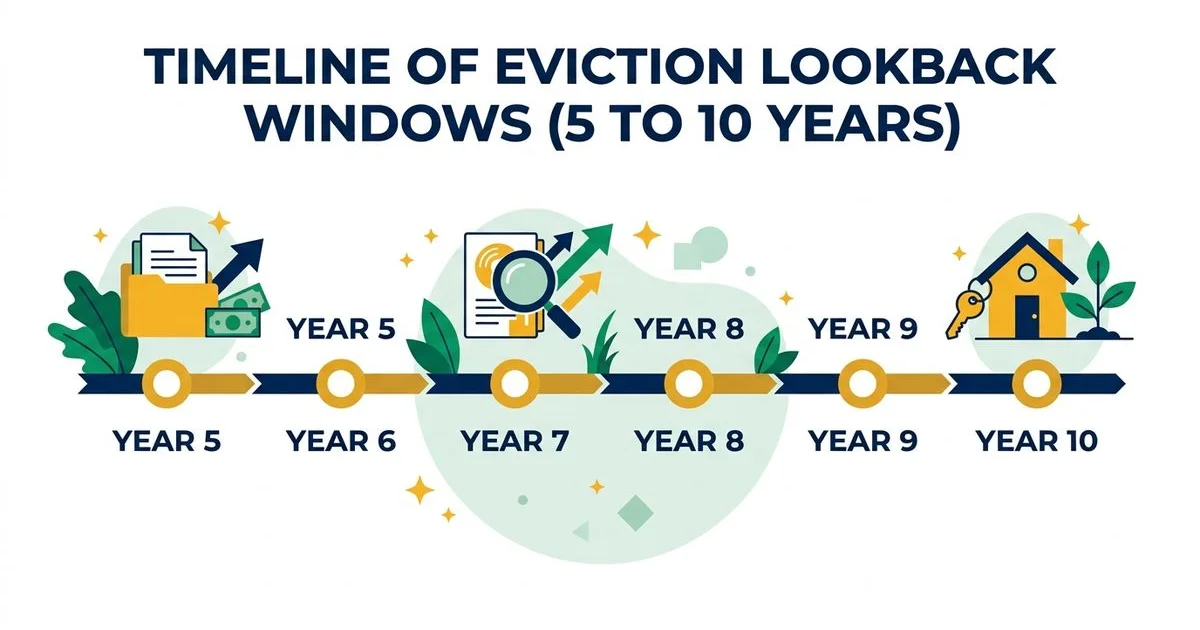
Court filings are public records. We advise applicants that these filings can show up indefinitely depending on the depth of the property search. Most DFW communities limit their direct court searches to a five to ten year window.
Community-specific lookback periods
Community-specific lookbacks range from two years to lifetime bans, depending entirely on the published rental qualifying criteria. The National Apartment Association reports that a single eviction costs managers $3,500 to $10,000 in legal fees and lost rent. We understand why landlords enforce strict screening rules to avoid these massive expenses.
Recent 2026 updates to Texas tenant screening laws mandate that properties provide a written list of these criteria before accepting application fees. You can request a refund if they deny your application based on undisclosed rules. Common windows seen in DFW include:
- 2 to 3 years: Most flexible. Common at garden-style operators in Arlington and Grand Prairie.
- 5 years: Typical at Class B mid-rise and many newer garden-style communities.
- 7 to 10 years: Common at Class A high-rises in Plano, Frisco, and newer Uptown construction.
- No lookback (any record declines): Rare but exists at the strictest premium communities.
Our locators confirm that a four-year-old judgment can clear a two to three year lookback community at a standard tier. That exact same record will trigger a hard decline at a ten-year lookback community.
How dismissals change the math
A dismissal changes the calculation significantly. Most hybrid-approval communities apply a separate, much lighter weight to dismissed cases. Our clients sometimes see zero penalty if the dismissal was in their favor.
Even within a community standard lookback window, a dismissal often clears at standard tier with no risk fee. The initial filing still creates a public record the moment a landlord submits it to the court.
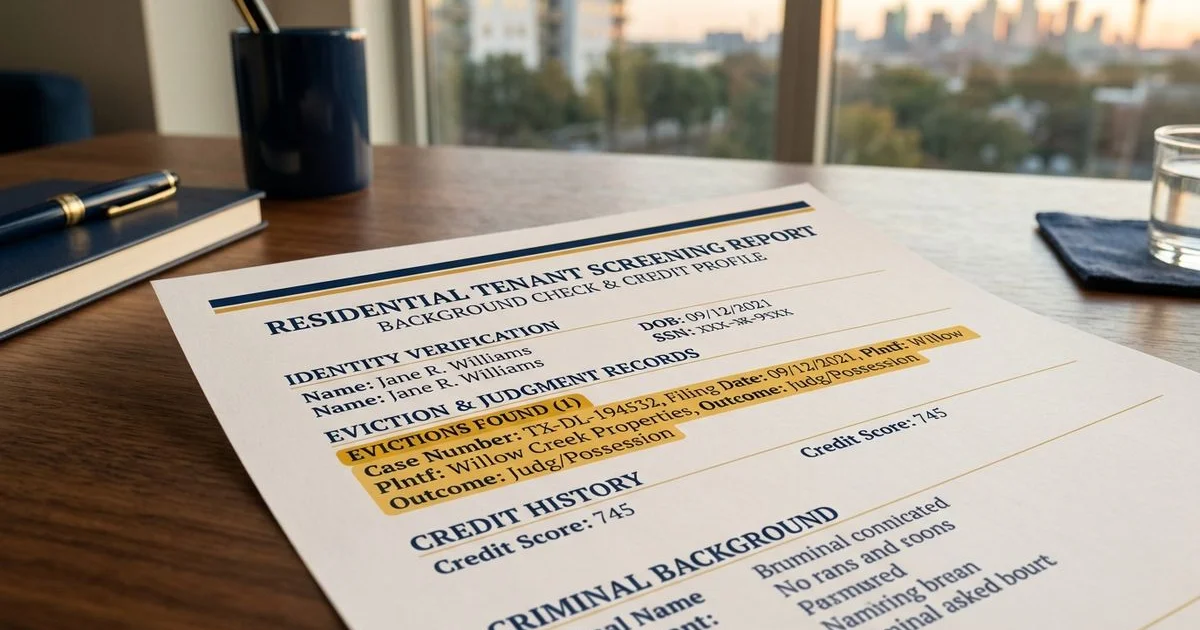
We remind renters that screening databases typically surface this initial filing within 30 to 60 days. You will likely need to provide court documents proving the dismissal to override the automated system flag.
How recent records weigh differently
Even within the lookback window, more recent records weigh heavier than older ones. A 14-month-old judgment is reviewed differently than a five-year-old judgment under the same lookback. Our team evaluates the type of record, such as a filing, judgment, or dismissal, against your current income offset.
Properties often require a strict three times rent-to-income ratio to offset the risk of an older filing. The practical approval odds for an older record improve significantly if you hold strong credit. Our walkthrough of apartments that accept evictions in Dallas and how approval works details the exact criteria these communities apply.
We maintain the full eviction approach in the Eviction & Broken Lease Apartment Locating hub. When you are ready to apply at communities whose lookback period works in your favor, tell us your situation and the locators will line up the right list within 24 to 48 hours.
Frequently asked questions
How long does an eviction stay on your record in Texas? expand_more
Does a dismissed eviction count against me? expand_more
What does 'lookback period' mean exactly? expand_more
Can old evictions be removed from my report? expand_more
Related service
Free locating for renters with an eviction, broken lease, or unpaid landlord debt across DFW.
See Eviction & Broken Lease