
Bad Credit vs. Guarantor: Which Path Fits You?
Deposit-based or guarantor-based approval? Compare the cost trade-offs, which DFW properties prefer which, and how to choose the right path.

Our perfect credit clients usually focus on securing cash rebates and free moving services. Life, however, rarely stays perfectly predictable. You might suddenly need to help a family member, or a shift to self-employment might complicate your own application.
We see this dividing line every day in the Texas market.
The reality of an apartment guarantor vs bad credit approval is that low-credit applicants generally face two clear choices. You either stack a deposit and risk fee on a standard application, or you bring in a backstop.
Our team knows the right choice depends on community acceptance and the specific cost math for your lease. Let’s look at how the numbers actually break down and explore the most effective ways to secure that approval.
The deposit path
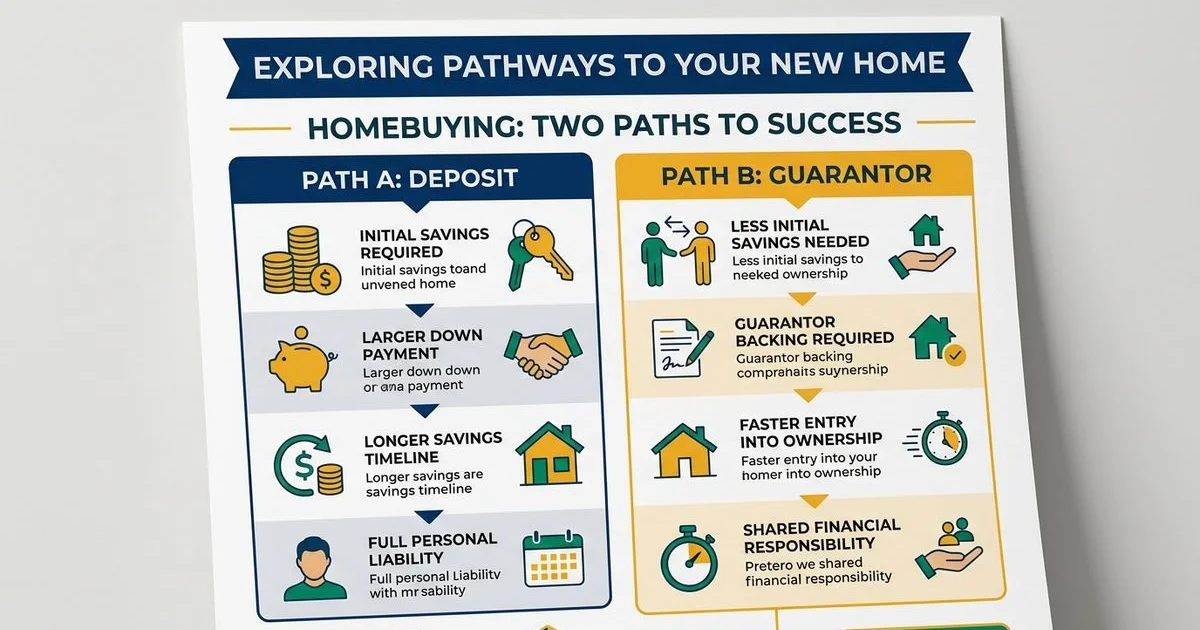
The deposit path works by having the community accept your application despite low credit, but they add conditional approval terms like a risk fee or a double security deposit. The application itself is yours alone, and no co-signer is involved.
We find this route limits third-party complications. A recent update to Texas law under HB 2901 capped standard security deposits at one month’s rent for leases signed after September 2025. This legal shift means properties now rely more heavily on non-refundable risk fees to offset lower credit scores.
Our clients often encounter Credit Risk Mitigation fees ranging from $50 to $150 per month based on their exact FICO score drop. These fees act as a straightforward premium for the landlord. You simply pay a higher upfront or monthly cost to secure the unit, so we recommend asking for a full fee sheet before applying to avoid any surprises. Our breakdown of the risk fees and double deposits low-credit renters pay explains how to spot a fair offer.
Pros:
- No friend or family member is on the hook
- No platform fee to a third party
- Refundable deposit portion comes back at end of lease
- Faster: one application, no platform underwriting
Cons:
- More cash upfront
- A risk fee is non-refundable
- Higher month-to-month cost if the risk fee is monthly
- Not every community accepts this path for sub-580 credit
The guarantor path
The guarantor path involves submitting a standard application while a personal co-signer or a paid platform backstops your lease. The landlord treats the file as a standard approval because the rent is now guaranteed by this third party. Our data shows this often clears even sub-580 files quickly.
Paid platforms like TheGuarantors, Rhino, or LeaseLock act as a surety bond for your apartment. A deposit vs guarantor apartment decision often hinges on these third-party costs.
TheGuarantors typically charges anywhere from 35% to 85% of one month’s rent as a non-refundable premium for a one-year lease. Rhino operates similarly, often breaking their fee into a monthly charge of $15 to $50 or more depending on your credit history. We remind renters that these platform fees are non-refundable and do not cover your liability if you damage the unit.
Pros:
- Often clears even sub-580 files
- Lower or standard deposit
- Cleaner monthly housing cost (no risk fee tacked on)
- Often required at Class A high-rise communities anyway
Cons:
- Personal co-signer is on the hook for the rent
- Platform charges a fee (often 5-10% of annual rent or up to 85% of one month)
- Slightly slower process (platform underwriting takes 24-48 hours)
- Not every DFW community accepts every platform
The cost math, in real numbers
The cost math reveals that a personal co-signer is always the cheapest option, while the deposit path generally beats paid platforms over a 12-month lease. We built a worked example for a $1,500/month apartment to illustrate the exact financial differences.
| Cost Element | Deposit Path | Guarantor (Platform) | Guarantor (Personal) |
|---|---|---|---|
| Standard Deposit (Refundable) | $500 | $500 | $500 |
| Add-on/Platform Fee (Non-Refundable) | $800 (Risk Fee) | $1,260 (~7% of annual rent) | $0 |
| Double-Deposit (Refundable) | $500 | $0 | $0 |
| Net Cost Over 12 Months | $800 non-refundable | $1,260 non-refundable | $0 non-refundable |
This analysis shows the deposit path is cheaper over a 12-month lease in this scenario. The gap narrows slightly for a 24-month lease at the same numbers, but the deposit path still wins out.
Our locators confirm a willing and qualified personal co-signer is almost always the best approval path bad credit applicants can take when available.

How to decide
You can decide the best route by evaluating your personal network first, then comparing the cash-on-hand requirements of the remaining options. We use a simple decision tree to guide renters through this final choice.
- Do you have a willing, qualified personal co-signer? → Use them. Cheapest.
- Is your situation close to clean but for the credit score? → Deposit path usually cheapest.
- Are you sub-580 with charge-offs and thin rental history? → Guarantor platform path is often the only one that clears the file.
Deeper detail on the platforms is in the Guarantor & Co-Signer Apartment Locating hub. The credit-side path lives in Bad Credit Apartment Locating.
Our experts are ready to help once the math is settled.
Just tell us your situation, and we will line up the right communities within 24-48 hours.
Frequently asked questions
Is a guarantor better than a big deposit? expand_more
Can I use both a deposit and a guarantor? expand_more
Which path do DFW landlords prefer? expand_more
What if I do not have a willing personal co-signer? expand_more
Related service
Free locating for renters with low or no credit. We target DFW communities that look beyond the score.
See Bad Credit